November 2016 | Practical Experience Report by Astrid Kliem, Nurse and Wound Specialist, Berlin, Germany, with the assistance of Dr. med. Michael Jecht, Community Hospital Havelhöhe, Medical Clinic – Diabetology, Berlin, Germany and Susanne Hagen, Specialist Nurse and Wound Expert
Patient Data and Medical History:
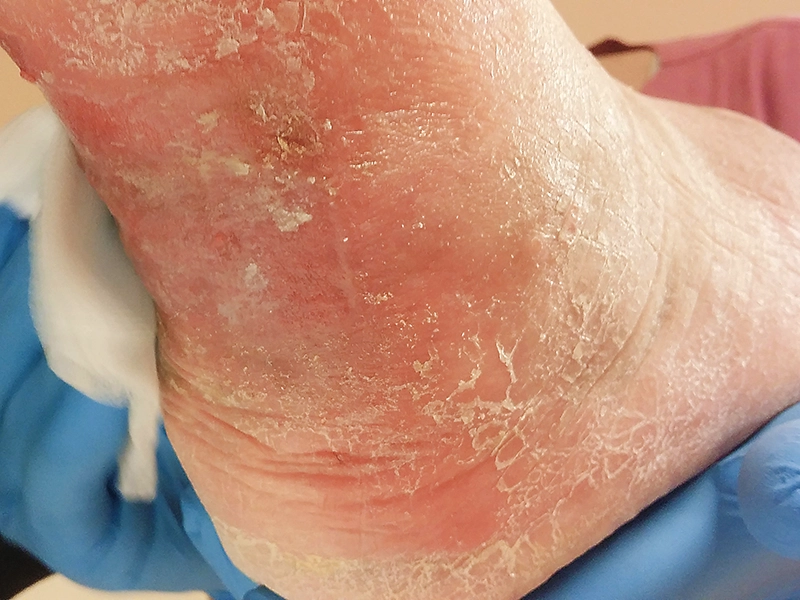
The patient is a 71-year-old male with type 2 diabetes, diagnosed in 2013, and insulin-dependent since December 2014. He also has diabetic neuropathy and experienced a stroke in 2014, resulting in right-sided hemiparesis and dependence on a wheelchair. Despite a very good home situation and care from his wife, who also manages his wound, the patient has been dealing with a challenging ulceration. The wound, located above the right Achilles heel, has been present since October 2015 and is likely exacerbated by pressure from the wheelchair. Initial treatments included hydrogel and greased gauze (Lomatüll) until November 2015. In December 2015, treatment shifted to medical honey and then to Silvercell. By January 2016, hydrogel was reintroduced, followed by continued use of Silvercell in February 2016, which improved granulation at the wound edges. In early March 2016, the treatment was changed to a foam with an adhesive border (Aquacel Foam).
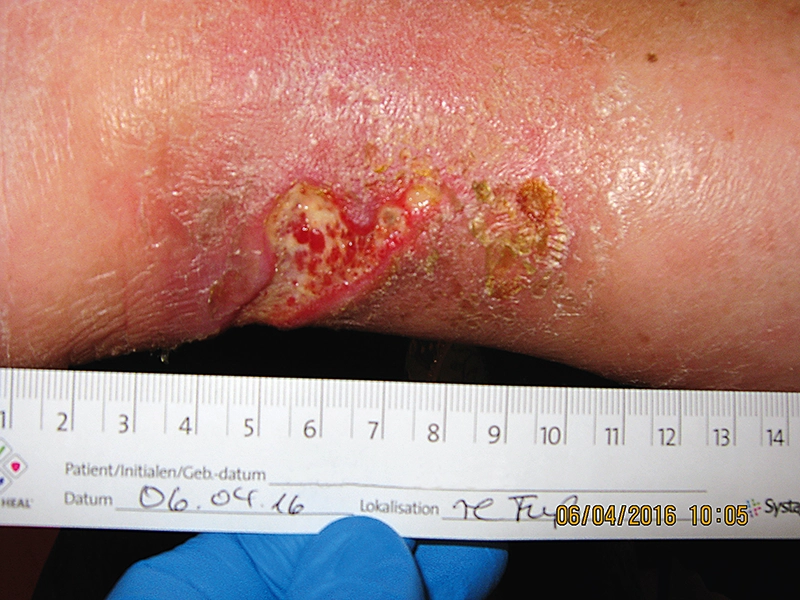
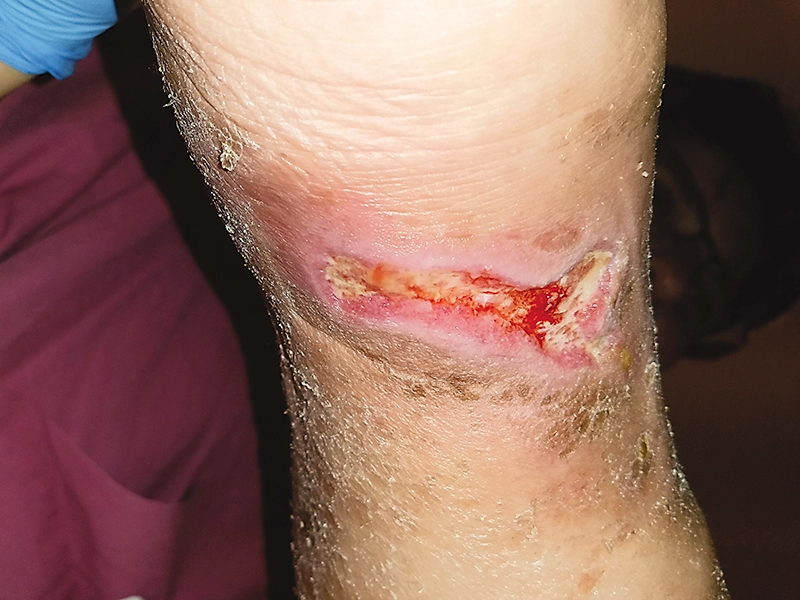
Wound condition on April 6, 2016:
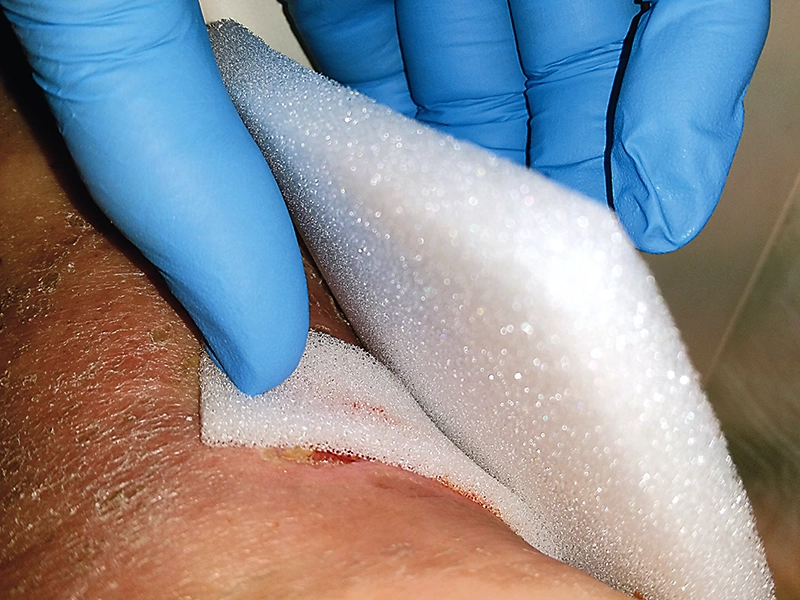
the wound is jagged, inflamed, and covered with fibrin coatings, with some granulation present. The area of the wound measures 4.7 x 2.0 in (12 cm x 5 cm) and has a depth of 0.2 in (0.5 cm). The surrounding skin is dry, flaky, and touch-sensitive, with minimal pain. The wound has shown no improvement under the previous treatments, and there has been an increase in wound size and inflammation. At today‘s appointment with Dr. Jecht, the therapy was changed to LIGASANO®. The wound will be cleaned with Prontosan wound irrigation solution and treated with Prontosan Woundgel X. The dressing will consist of LIGASANO® White Dressing, sizes 2.4 x 1.0 x 0.16 in and 4 x 4 x 0.4 in (6 x 2.5 x 0.4 cm and 10 x 10 x 1 cm) and a bandage of LIGASANO® Pressure Relief Foam, size 118 x 4 x 0.12 in (300 x 10 x 0.3 cm).
-
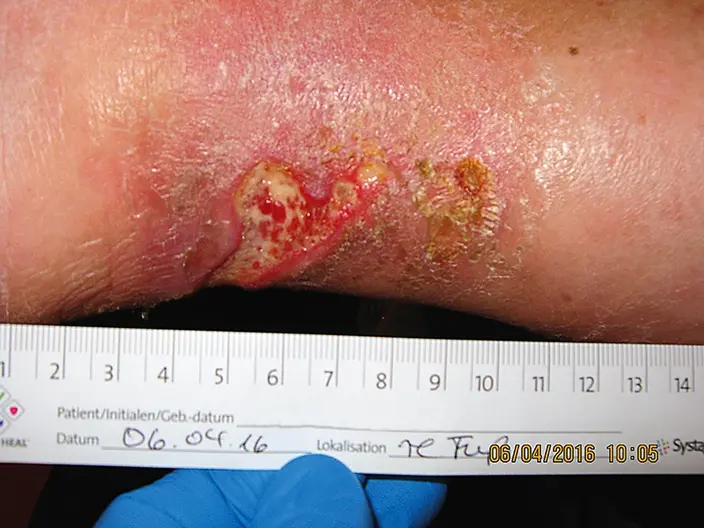
Fig. 4.19.1: April 6, 2016: wound condition before treatment with LIGASANO® White Dressing. -
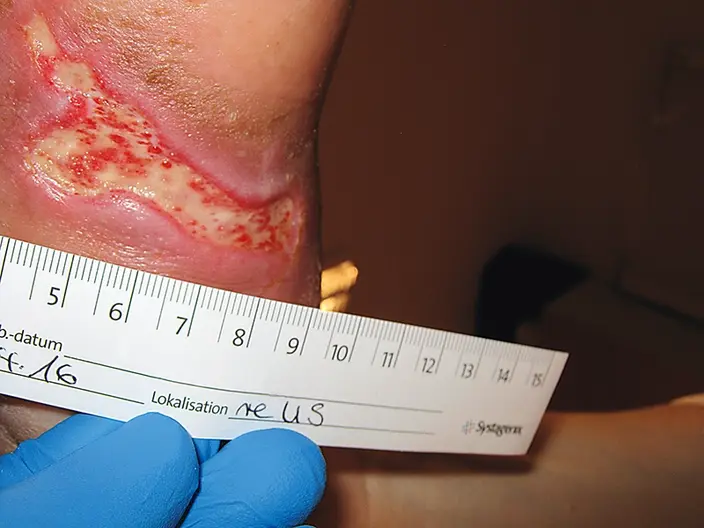
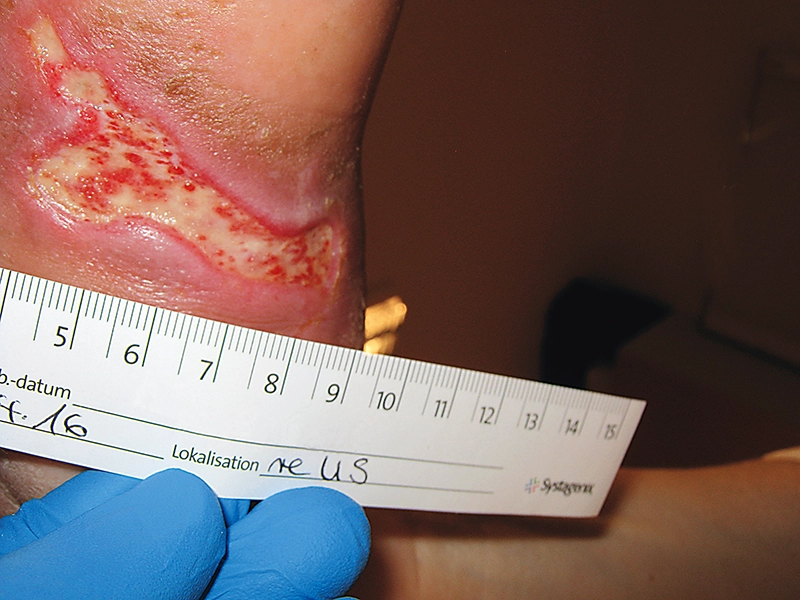
Fig. 4.19.2: April 20, 2016: the wound size is now 4.3 x 2.0 x 0.2 in (11 x 5 x 0.5 cm), with reduced coatings but otherwise unchanged. -
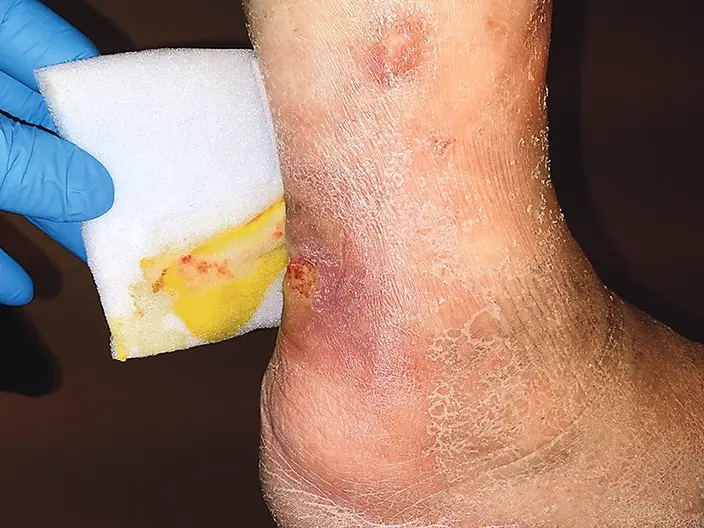
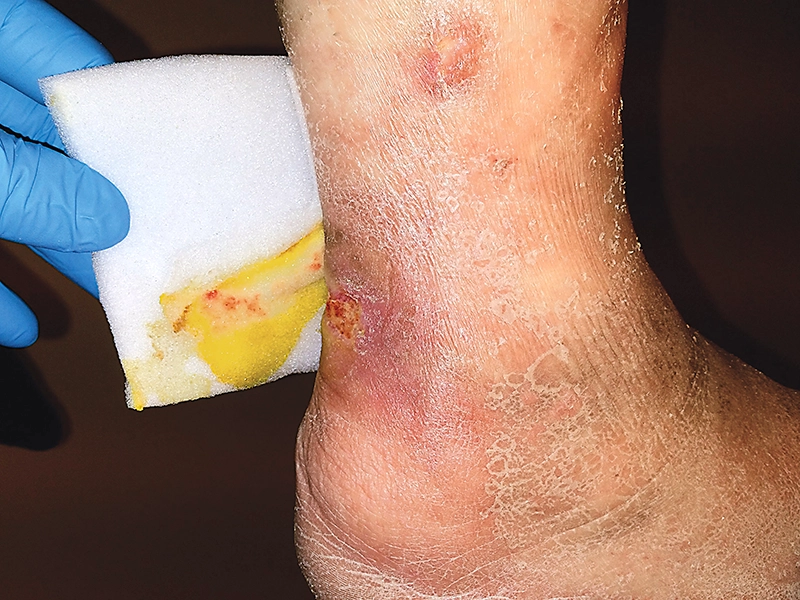
Fig. 4.19.3: May 10, 2016: the wound condition has improved significantly, with further reduction in coatings. -
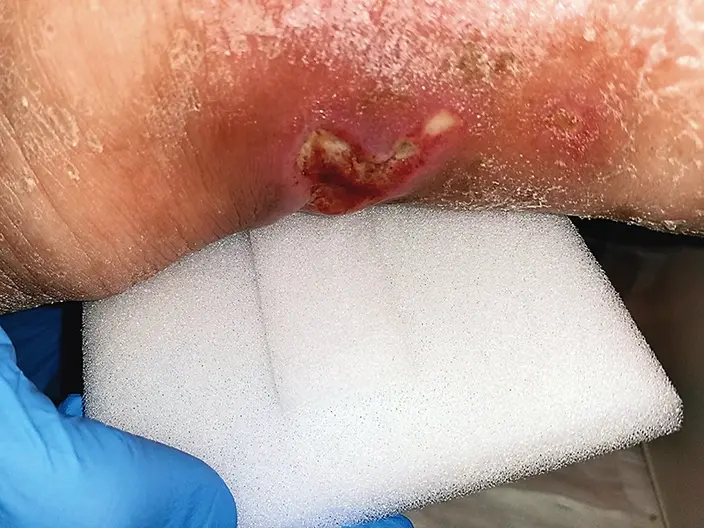
Fig. 4.19.4: May 10, 2016: wound cleaning and dressing performed as before, with no change in therapy. -
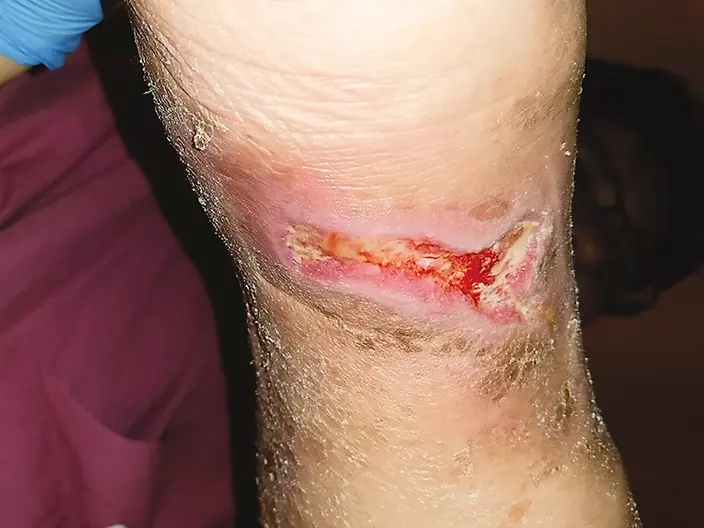
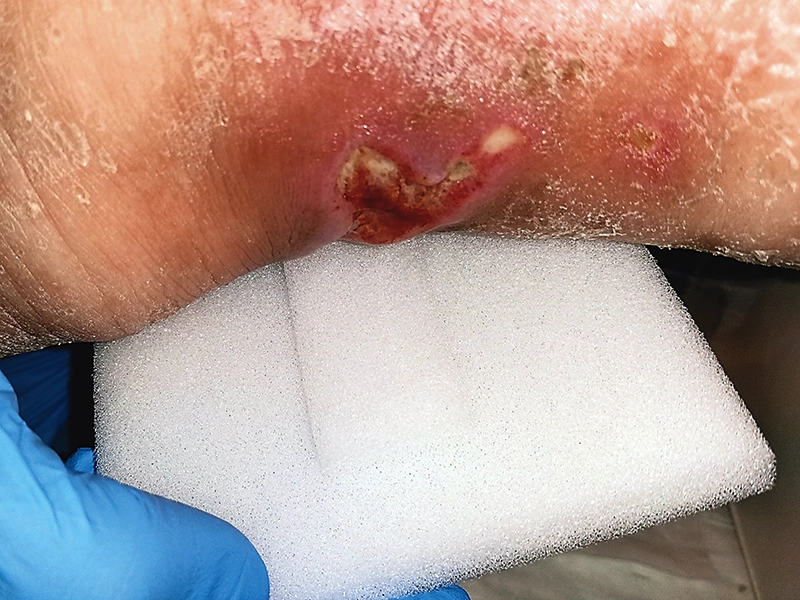
Fig. 4.19.5: June 1, 2016: the wound is shallower than before and shows several areas of granulation tissue. -
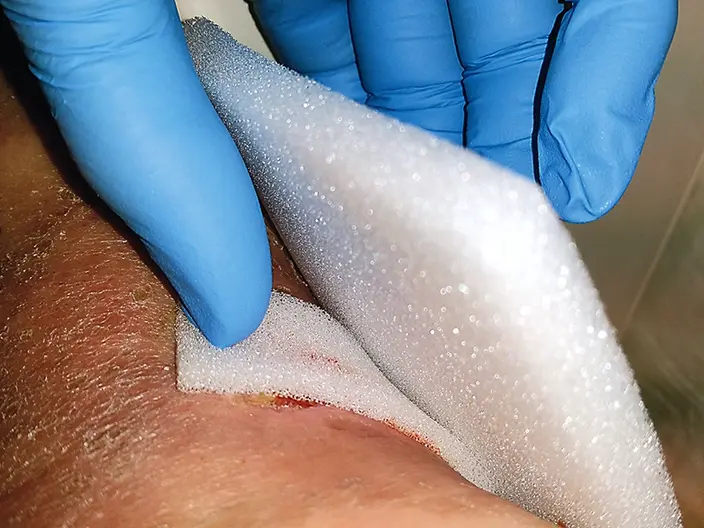
Fig. 4.19.6: June 1, 2016: wound cleaning and dressing as before. -
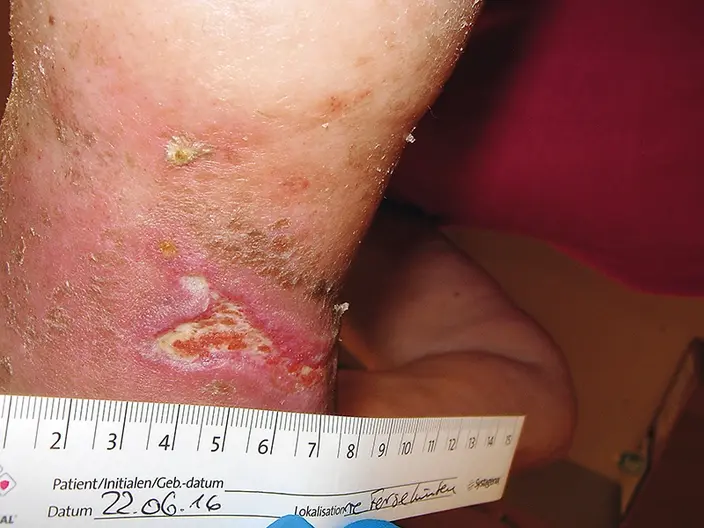
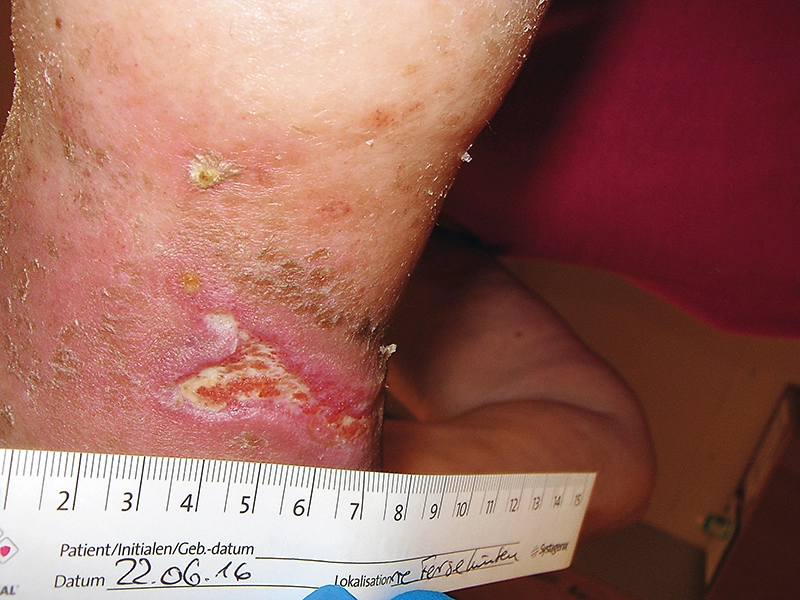
Fig. 4.19.7: June 22, 2016: the wound has continued to decrease in both area and depth and is now fully granulated. -
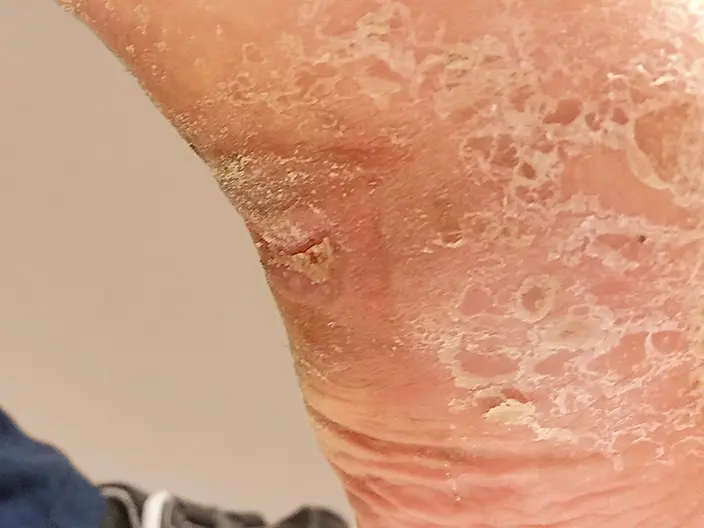
Fig. 4.19.8: July 13, 2016: the wound size is now 1.2 x 0.4 x 0.08 in (3 x 1 x 0.2 cm), with minimal exudate. Granulation and epithelialization are progressing slowly, and the wound is generally healing well. -
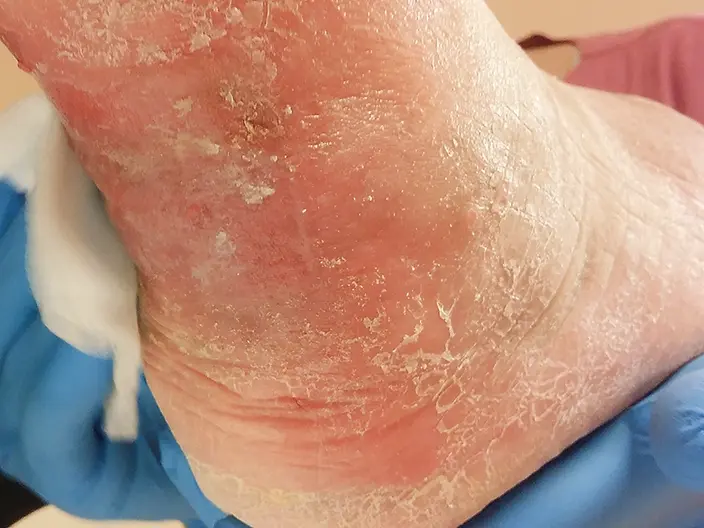
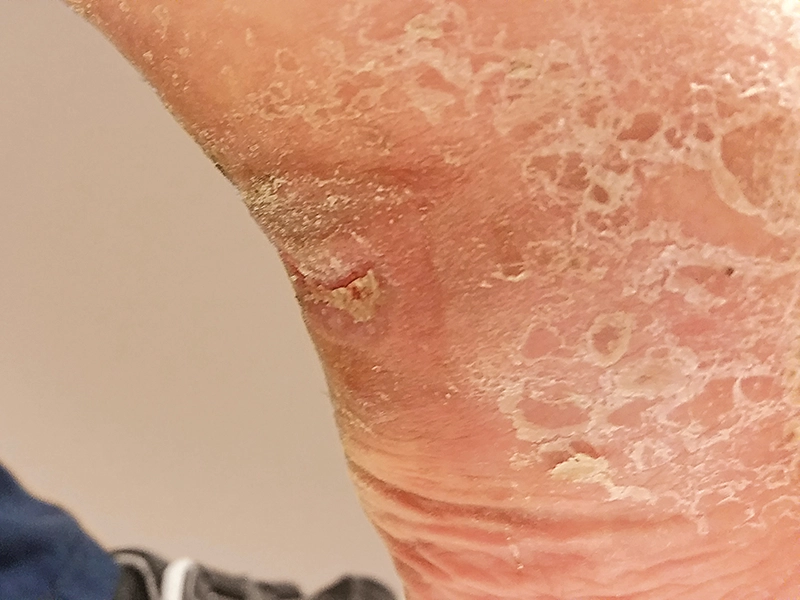
Fig. 4.19.9: November 15, 2016: the wound has completely healed.