Juli 2022 | Practical Experience Report by Daniela Laskowski, Nurse and Wound Specialist (ICW), 36151 Burghaun-Steinbach, Germany
Patient Data and Medical History:
A 51-year-old patient with no previous illnesses and in good physical condition was diagnosed with an extensive gluteal abscess on the right side. On April 17, 2022, the patient underwent excision and counter-incision with flap insertion. The chosen therapy involved wound care with cavity dressings made from LIGASANO® White Dressing.
-
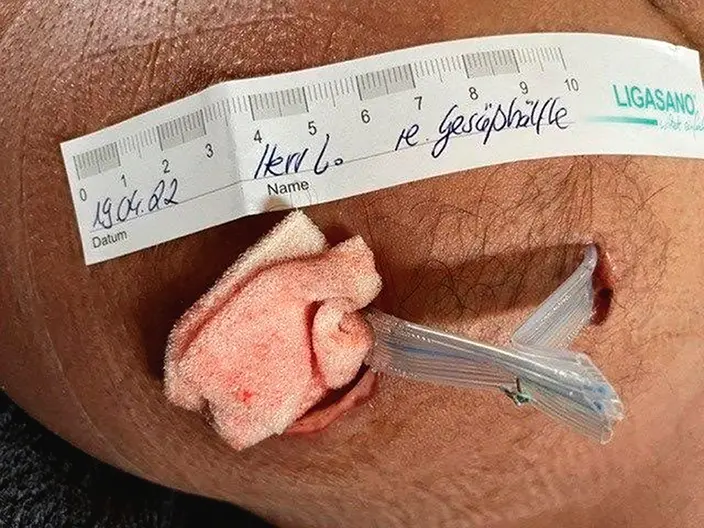
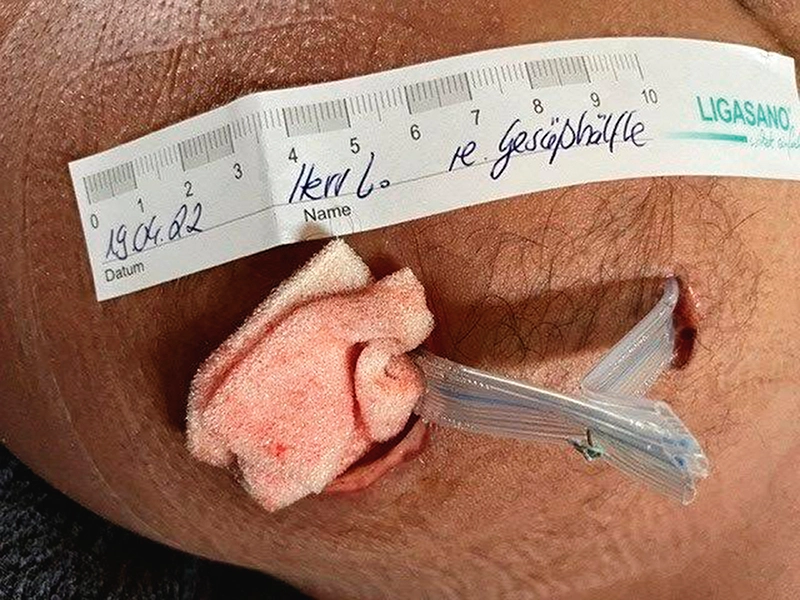
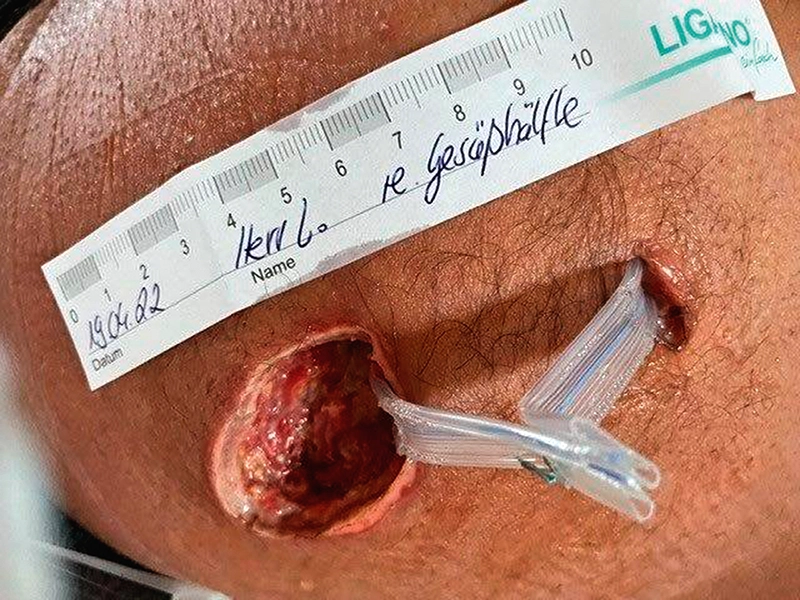
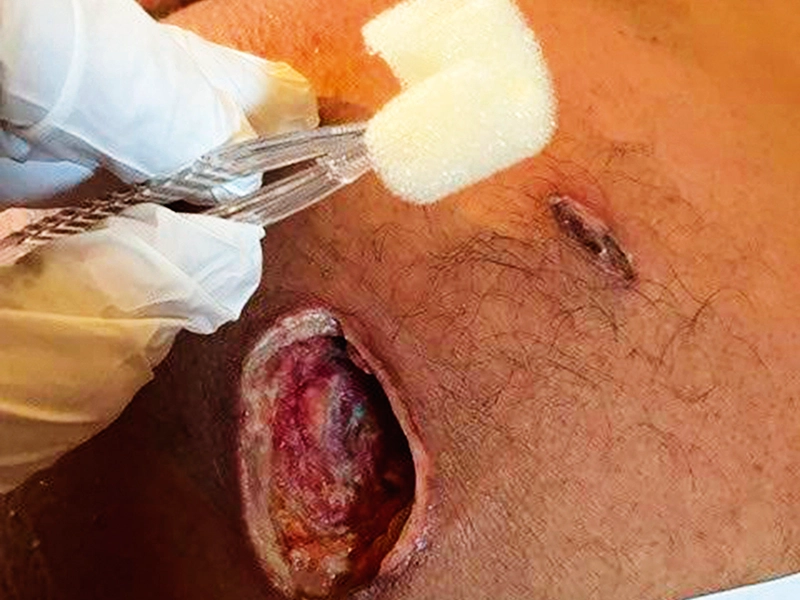
Fig. 1: April 19, 2022: the flap remains in place with heavy exudation. The exudate is serous and slightly bloody. The condition of the wound and the LIGASANO® White Dressing is assessed before the dressing change. -
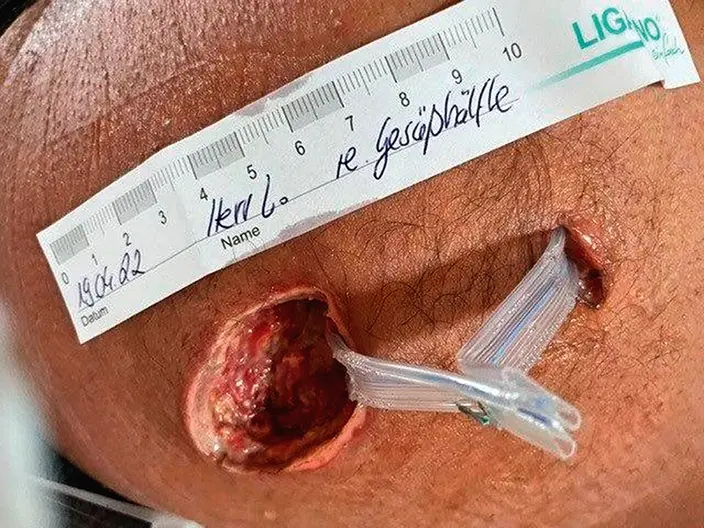
Fig. 2: April 19, 2022: after the removal of the LIGASANO® White Dressing and irrigation (wound cleansing with Prontosan), the wound measures 1.8 x 1.4 in (4.5 x 3.5 cm) with a depth of approximately 1.1 in (2.8 cm). -
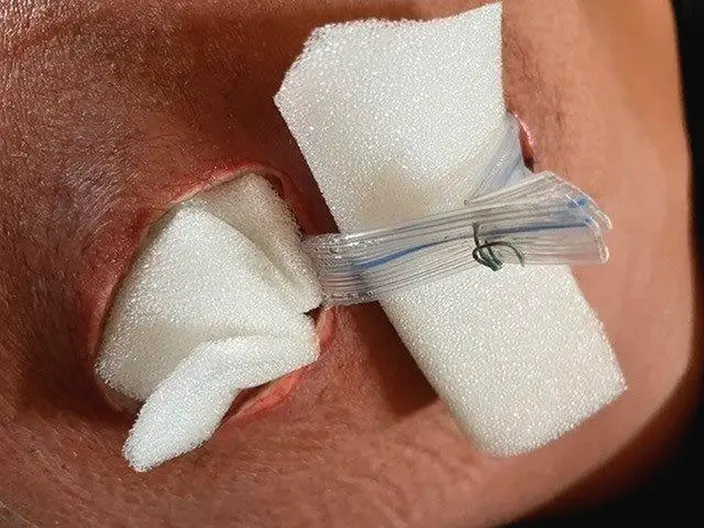
Fig. 3: a sterile wound filler made of LIGASANO® White Dressing, moistened with Prontosan, was inserted. LIGASANO® White Dressing, 6 x 4 x 0.2 in (15 x 10 x 0.5 cm), was cut to fit, with the remaining material used to pad the flap. A superabsorbent was applied as a secondary dressing, and the dressing was changed daily.
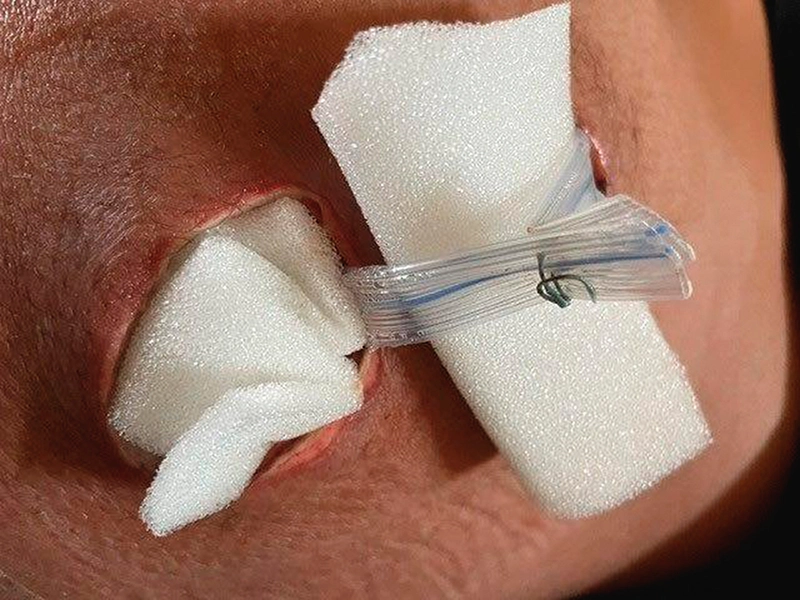
On April 22, 2022 the flap was removed. The treatment at the clinic used LIGASANO® White Dressing for both cavity dressing and wound covering, with a superabsorbent as the secondary dressing.
-
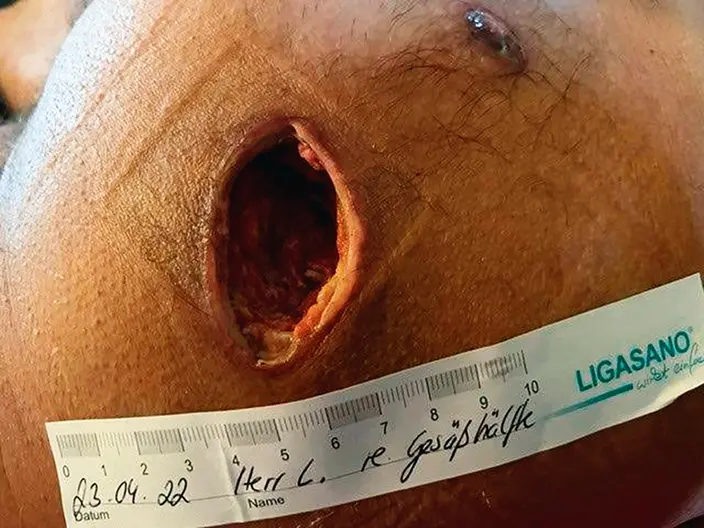
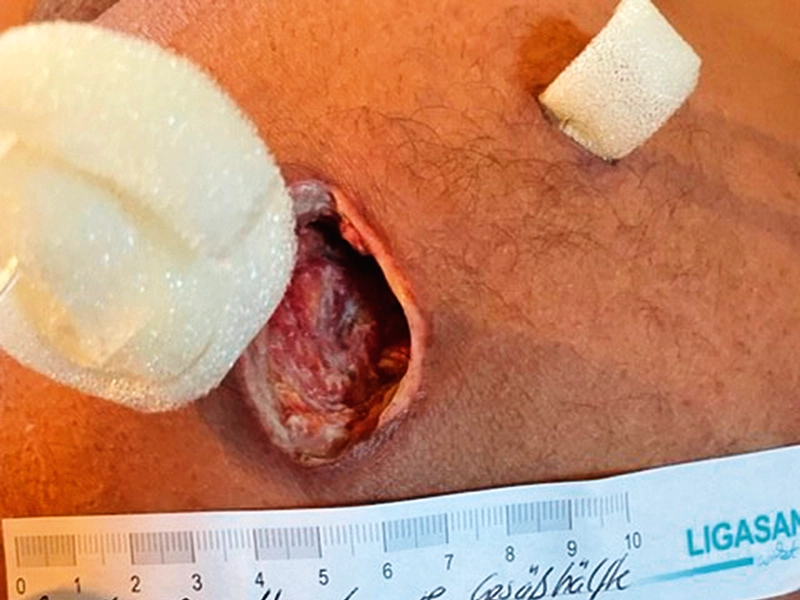
Fig. 4: April 23, 2022: after cleaning and irrigation with Prontosan wound irrigation solution, the wound cavity shows granulation tissue. The wound size is 1.7 x 1.2 in (4.2 x 3.0 cm), with a depth of approximately 0.9 in (2.3 cm). -
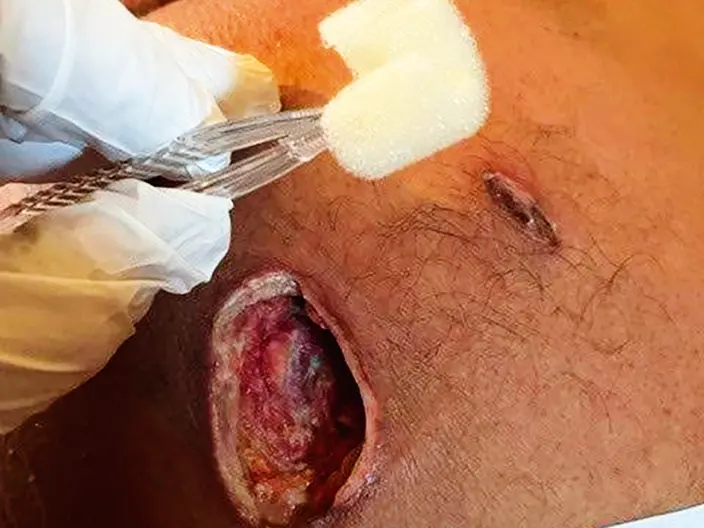
Fig. 5: April 23, 2022: the exit site of the flap shows slight inflammation and yellowish exudate. Irrigation was performed with Prontosan wound irrigation solution, followed by packing the wound with a piece of LIGASANO® White Cavity Dressing, soaked with Prontosan. -
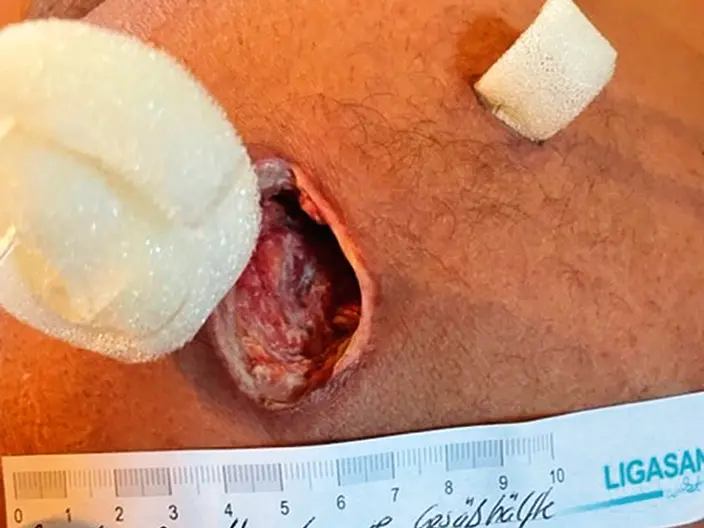
Fig. 6: April 23, 2022: the remaining LIGASANO ® White Dressing is rolled up and inserted into the wound cavity. Given the rounded shape of the wound and lack of undermining, a single piece of LIGASANO® White Dressing fits perfectly and is much easier to apply. This helps prevent the dressing from dislodging. -
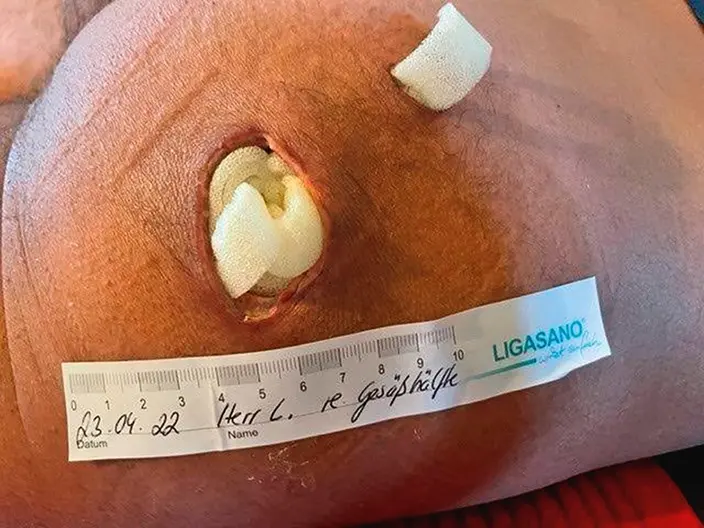
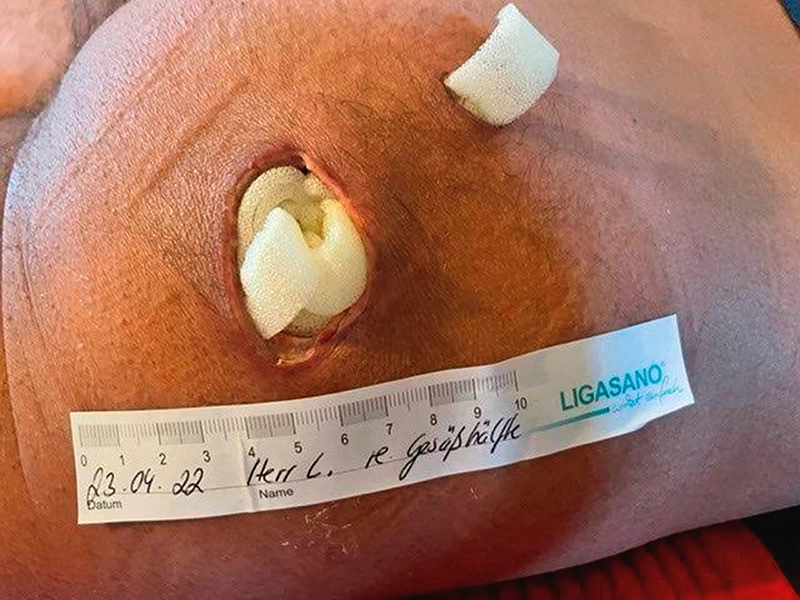
Fig. 7: April 23, 2022: finished packing with LIGASANO® White Dressing. -
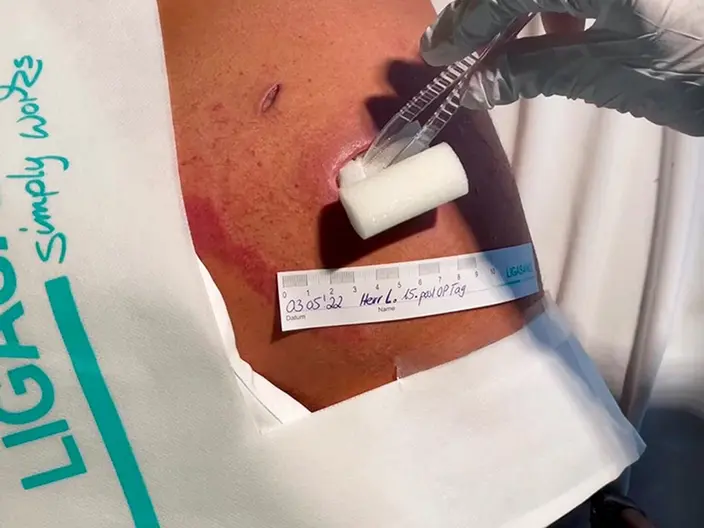
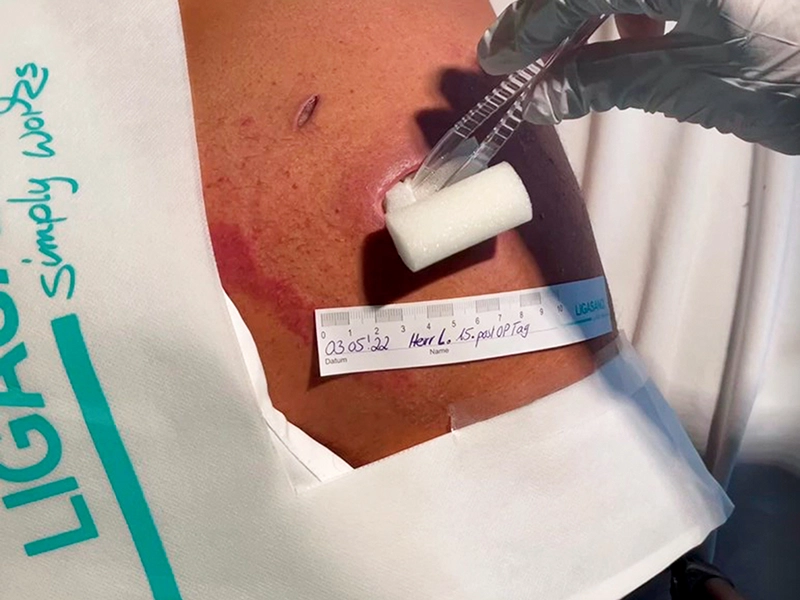
Fig. 8: May 3, 2022: alternative treatment with cavity dressing using LIGASANO® White Dressing in the size of a mini bandage. -
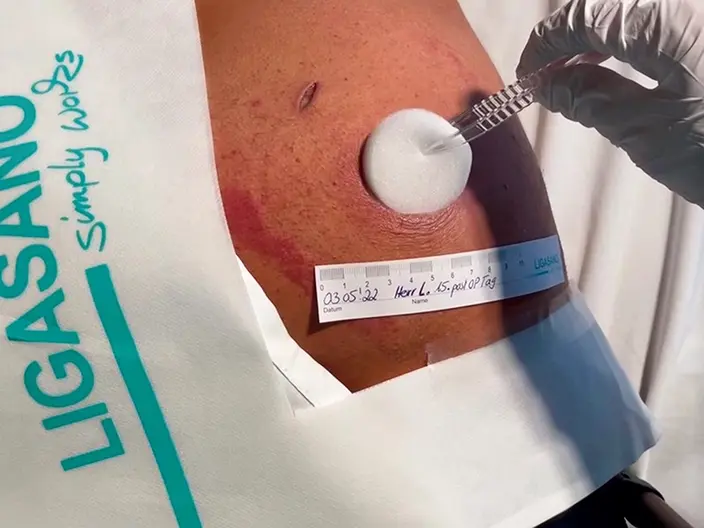
Fig. 9: May 3, 2022: alternative treatment with cavity dressing using LIGASANO® White Dressing in a round size, 2.0 in (5.0 cm) in diameter and 0.4 in (1.0 cm) thick.
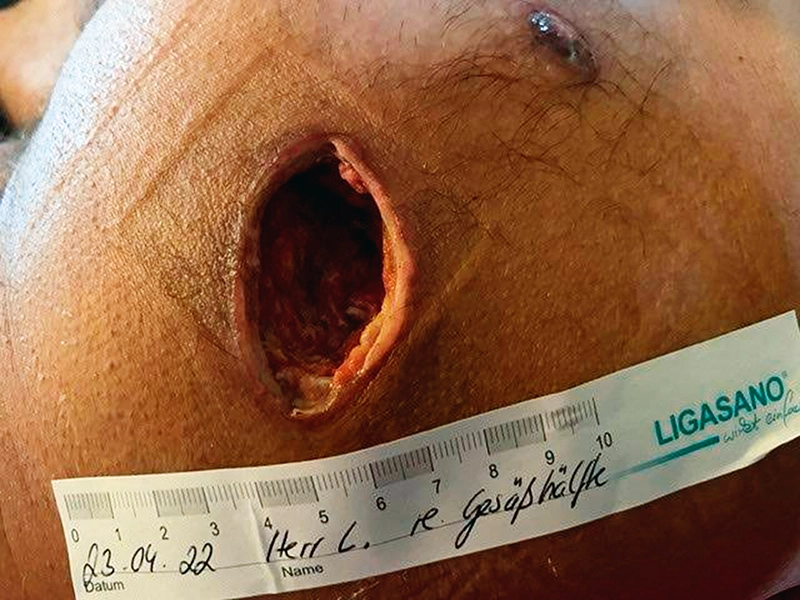
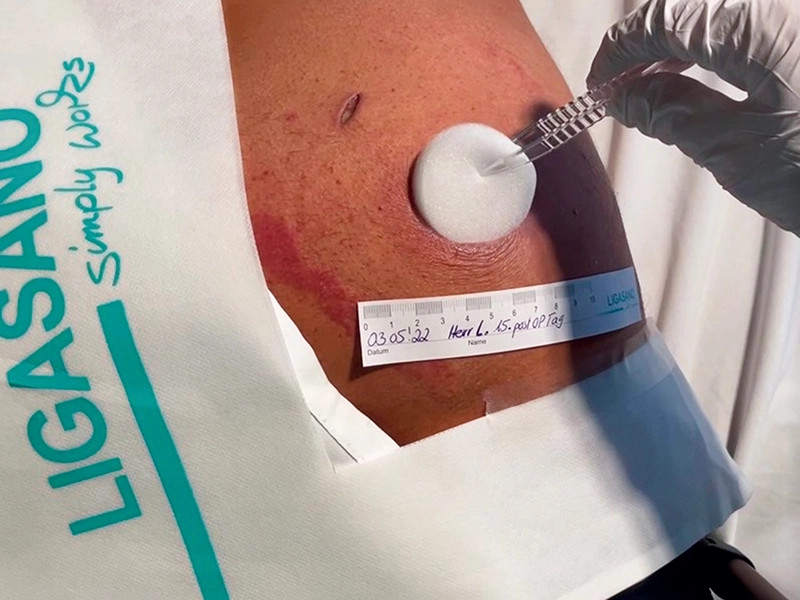
As the patient is very physically active and the dressing change interval is now extended to two days, the superabsorber remains in place as a secondary cover. This provides added security during daily activities. Exudation has decreased to moderate levels, with the exudate remaining serous and slightly bloody.
Deep wounds can be treated with various LIGASANO® White Dressing products. For example, wound dressings of sizes 6 x 4 x 0.2 in (15 x 10 x 0.5 cm) or 2 x 2 x 0.4 in (5 x 5 x 1 cm) can be cut to the required size using sterile scissors. Alternatively, the LIGASANO® White Cavity Dressing or the mini bandage can be used. For round cavities, a round LIGASANO® White Dressing is also an option.
-
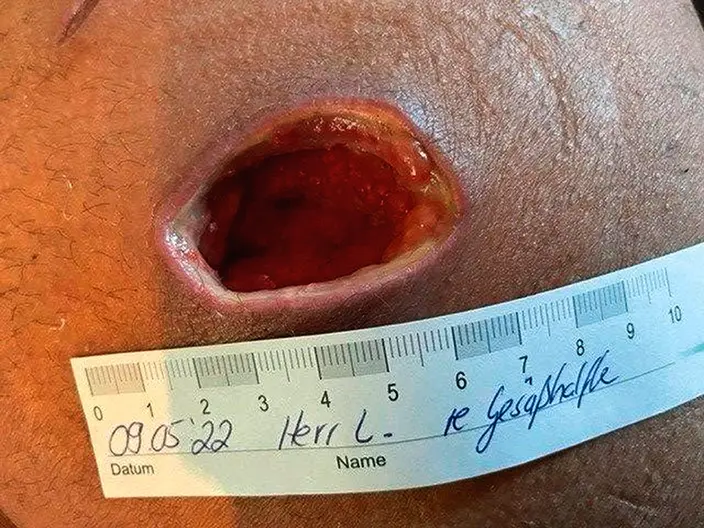
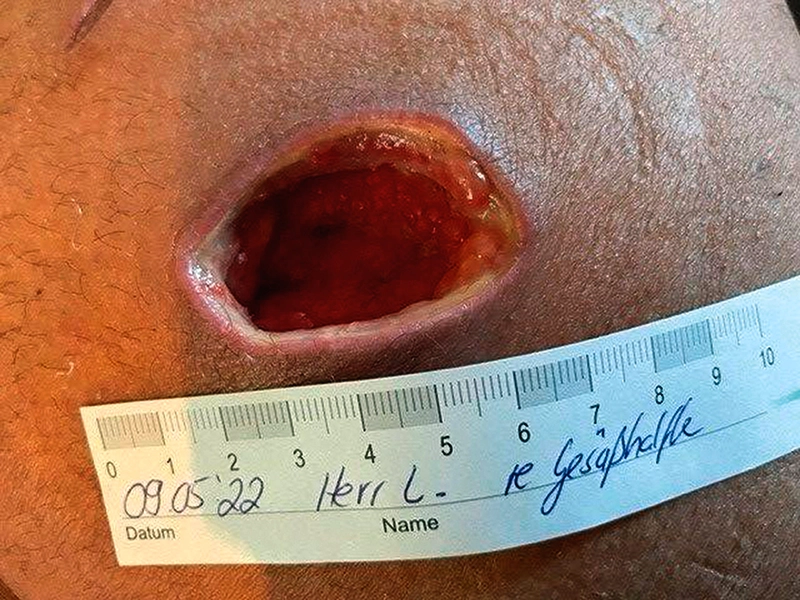
Fig. 10: May 9, 2022: the wound has reduced in size to 1.5 x 1.2 in (3.8 x 3.0 cm), with a depth of approximately 0.63 in (1.6 cm). The wound bed is free of coatings, well-perfused, and shows visible granulation. The wound margins and surrounding area are intact, without redness or maceration. Exudation is moderate and serous. -
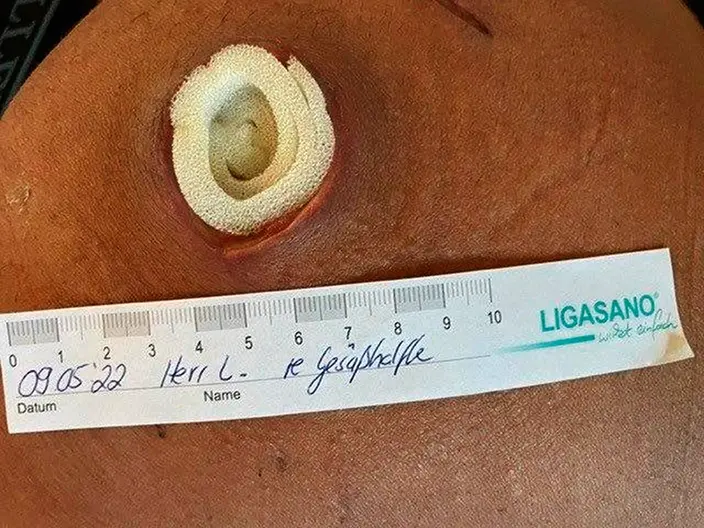
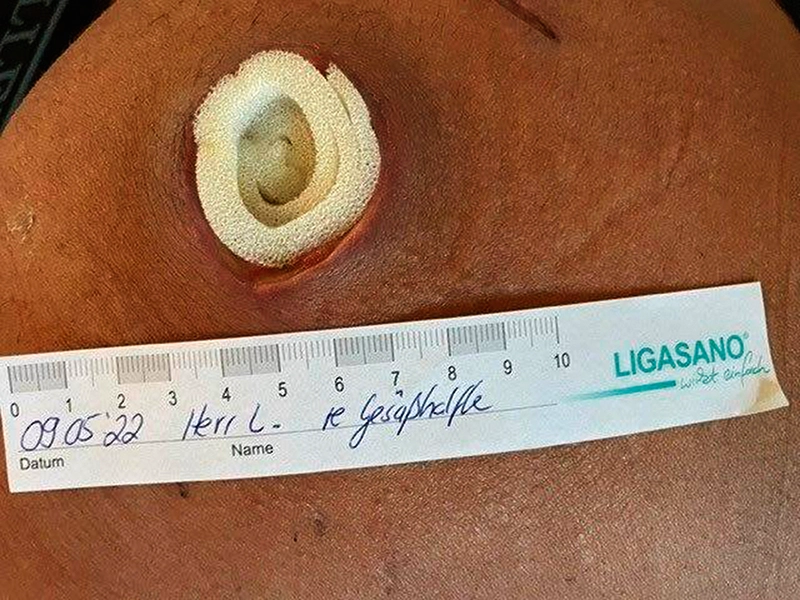
Fig. 11: May 9, 2022: treatment with LIGASANO® White Cavity Dressing, applied in a single piece. This method ensures good positioning within the wound cavity and prevents the wound strip from dislodging. -
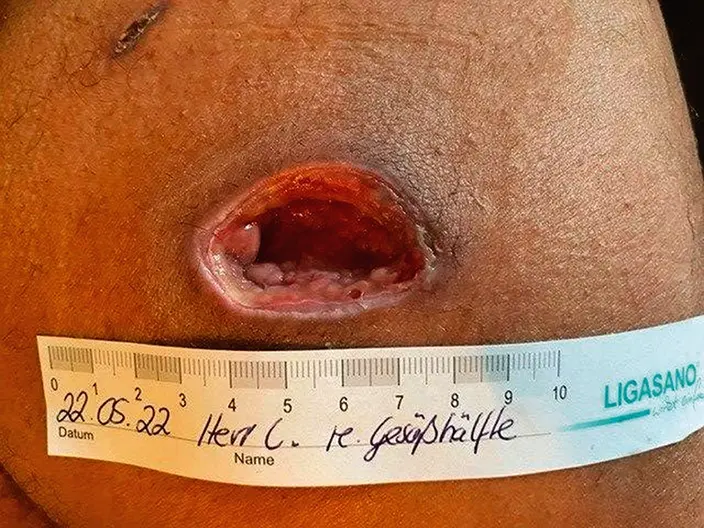
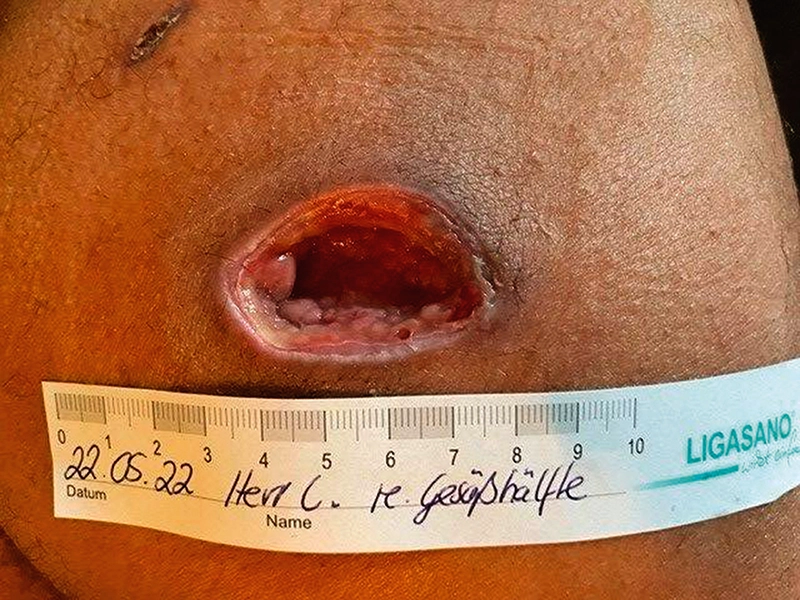
Fig. 12: May 22, 2022: the wound measures 1.6 x 1.0 in (4.0 x 2.5 cm) with a depth of 0.5 in (1.2 cm) at its deepest point. The wound bed is free of slough, well perfused, and shows visible granulation islands. Packing is achieved using a cut sterile LIGASANO® White Dressing, 2 x 2 x 0.4 in (5 x 5 x 1 cm). The wound is covered with a bordered foam dressing. Dressing changes occur every two days due to the patient‘s frequent movement and desire to shower, with only slight exudation. -
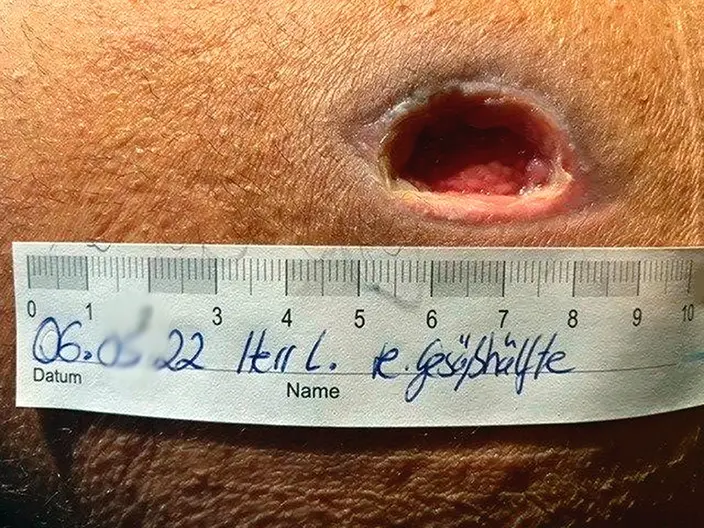
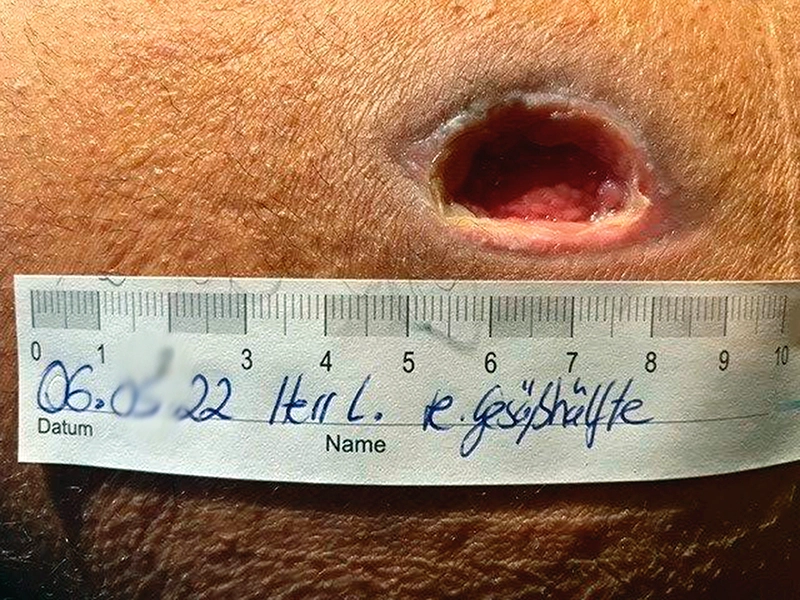
Fig. 13: June 6, 2022: the wound measures 0.9 x 0.6 in (2.3 x 1.5 cm), with a depth of about 0.24 in (0.6 cm) at its deepest point. The wound bed is clean, well-perfused, and free of slough. The edges and surrounding area are normal, with only a small amount of exudate. Dressings are changed every 1 to 2 days, based on the secondary dressing‘s longevity. -
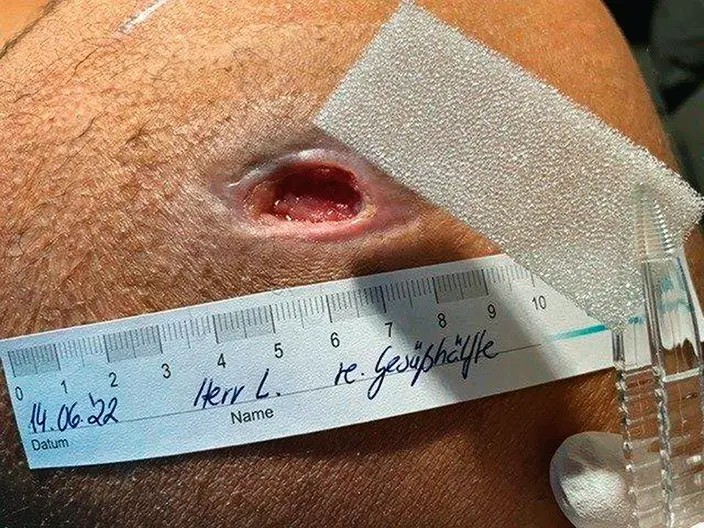
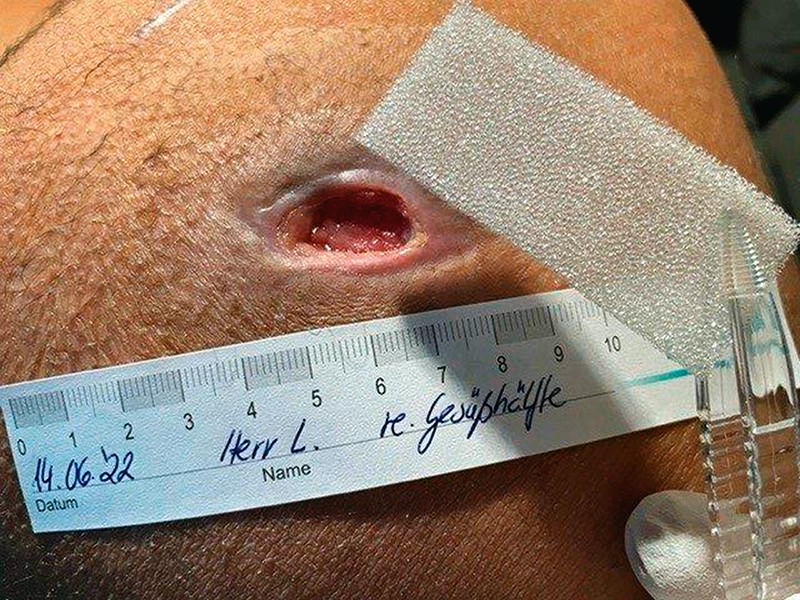
Fig. 14: June 14, 2022: the wound measures 0.87 x 0.43 in (2.2 x 1.1 cm) with a depth of 0.12 in (0.3 cm). The wound bed is clean, and the wound margins and surrounding area are intact and non-irritated. There is minimal, serous exudate, and the dressing is changed every 2 days. -
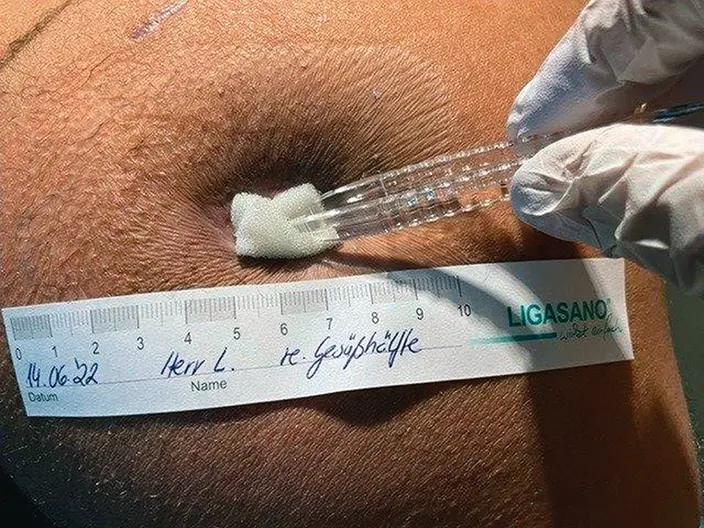
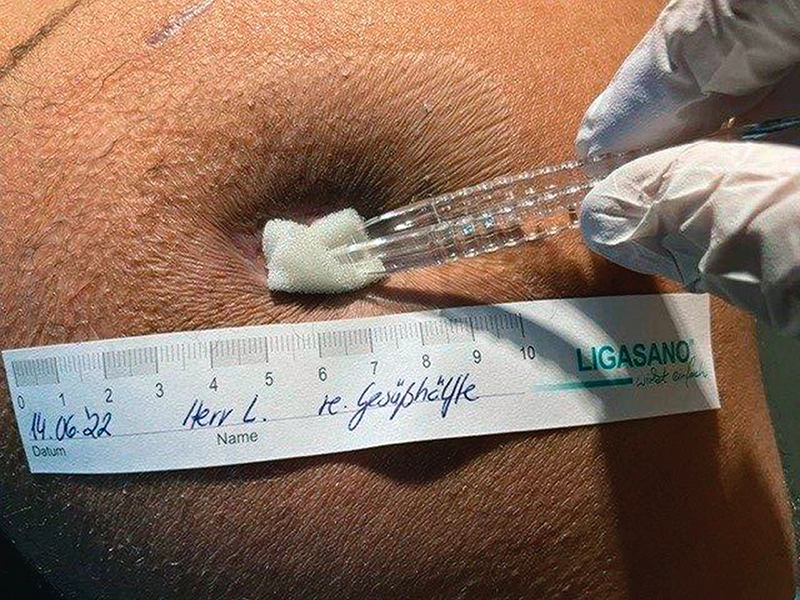
Fig. 15: due to the shallow wound depth, a smaller LIGASANO® White Dressing (2.4 x 1.0 x 0.16 in / 6 x 2.5 x 0.4 cm) is used for packing. Any excess material is trimmed. The wound edges do not show signs of maceration. The wound is covered with commercially available sterile film dressings. -
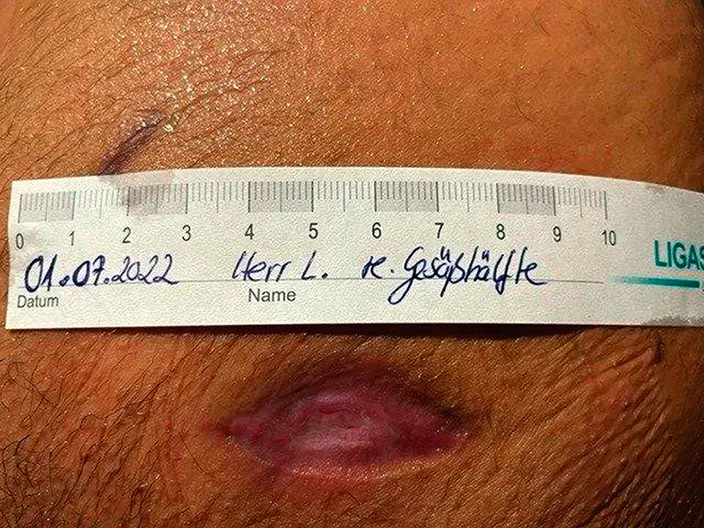
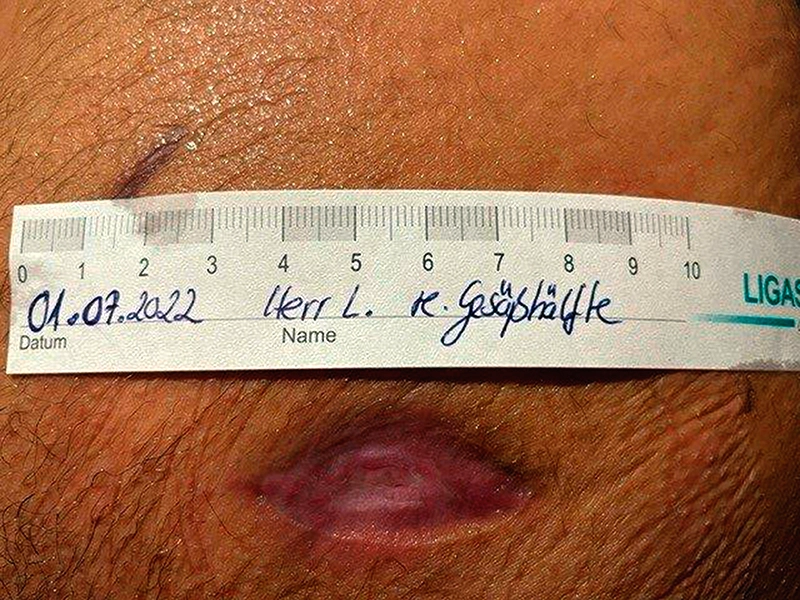
Fig. 8.17.16: On July 1, 2022, the wound has achieved complete epithelialization, and the scar tissue is flat. LIGASANO® White Dressing is still applied, and the epithelialized area is protected with a commercially available waterproof film dressing.