February 2016 | Practical Experience Report by Raphaela Hacker, Wound Care Nurse Therapist, and Tobias Beutlrock, Wound Care Nurse Therapist, Hospital Traunstein, Germany
Patient Data and Medical History:
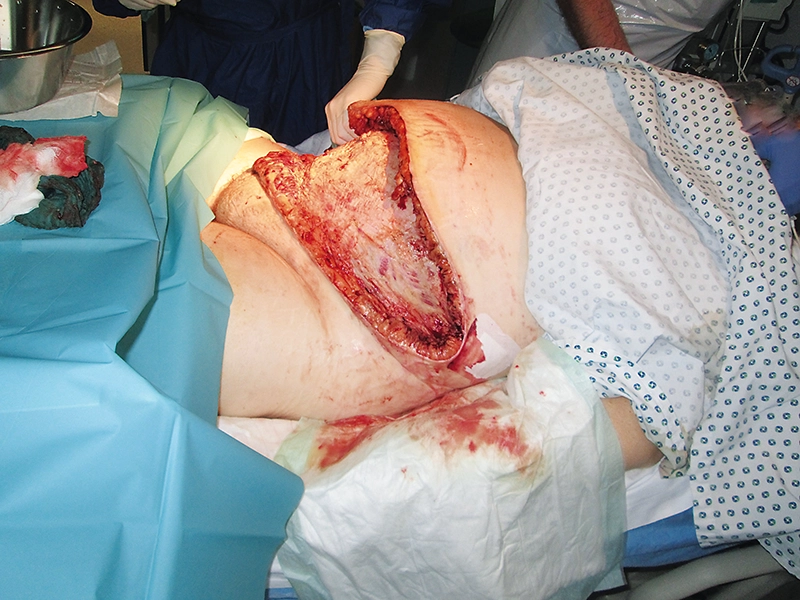
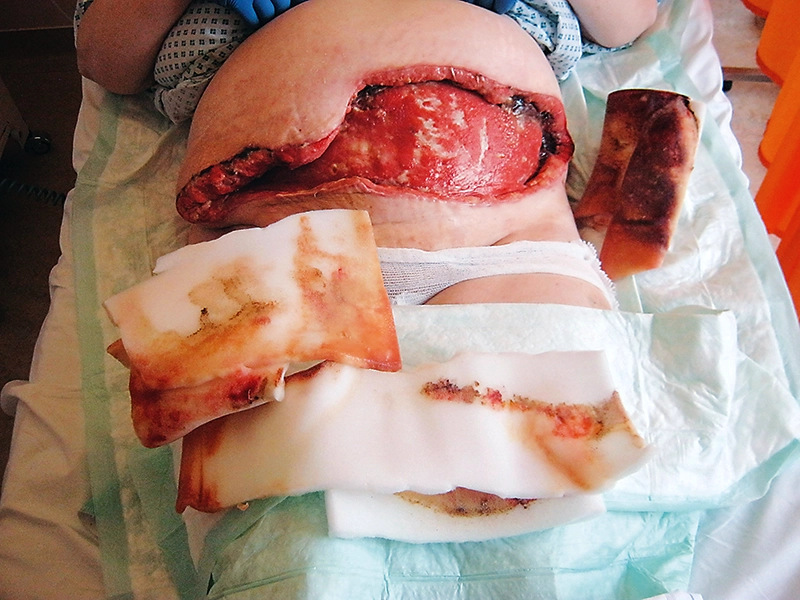
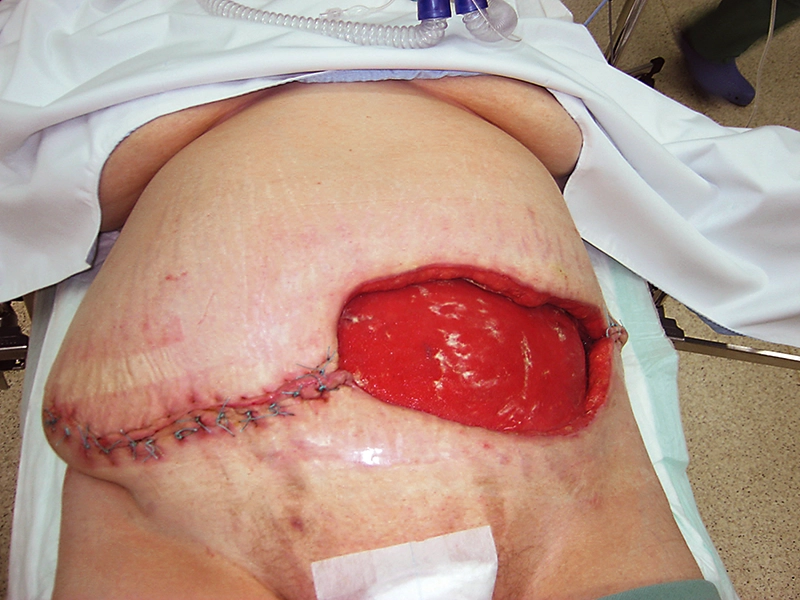
A 45-year-old female patient, a mother of three young children, geriatric nurse, and farmer, presented with severe complications following an injury. She weighs 229 lbs (104 kg) and is 66.2 in (168 cm) tall. At the end of January 2016, she pinched her abdomen in the zipper of her pants, resulting in an infection from a bird-related pathogen. Over the course of three days, her abdomen became intensely red, accompanied by fever and significant pain. She sought medical attention at a nearby hospital, which promptly referred her to a larger medical facility for further care. Upon arrival, she was diagnosed with acute renal failure and a high fever, and her condition rapidly deteriorated, making her barely responsive. That same night, 7.5 kg (16.5 lbs) of necrotic tissue was surgically removed. In the intensive care unit (ICU), she was managed with analgesics, and although she was conscious, she did not require mechanical ventilation. Her treatment included dialysis and antibiotic therapy. The wound was kept open and covered with sterile surgical sheets.
Beginning of wound treatment with LIGASANO® White Dressing on February 4, 2016:
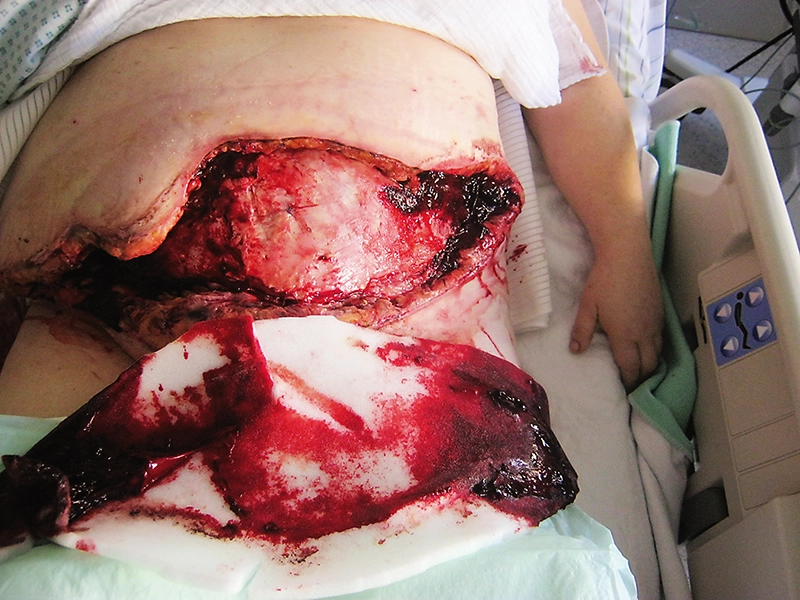
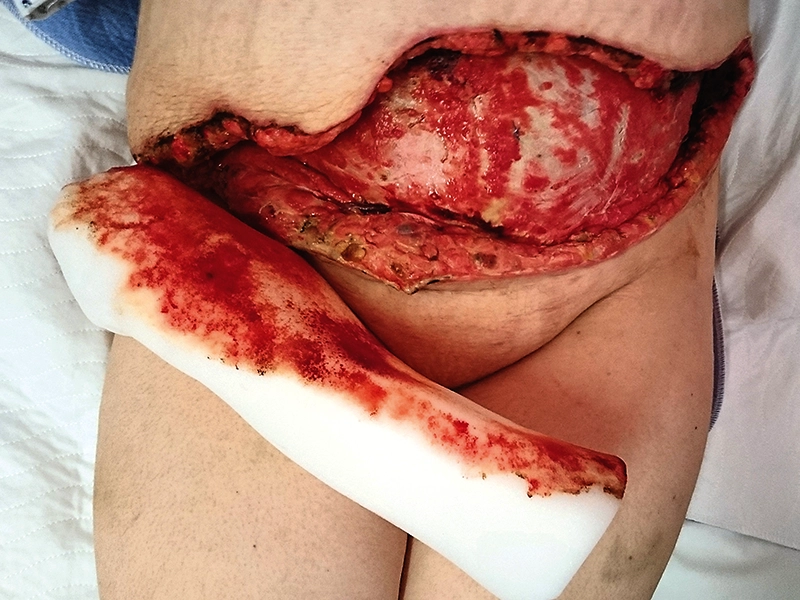
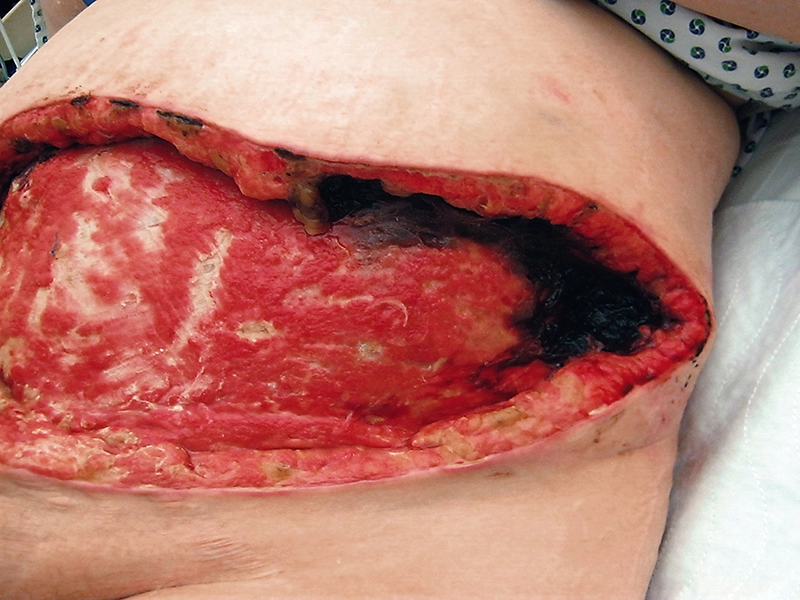
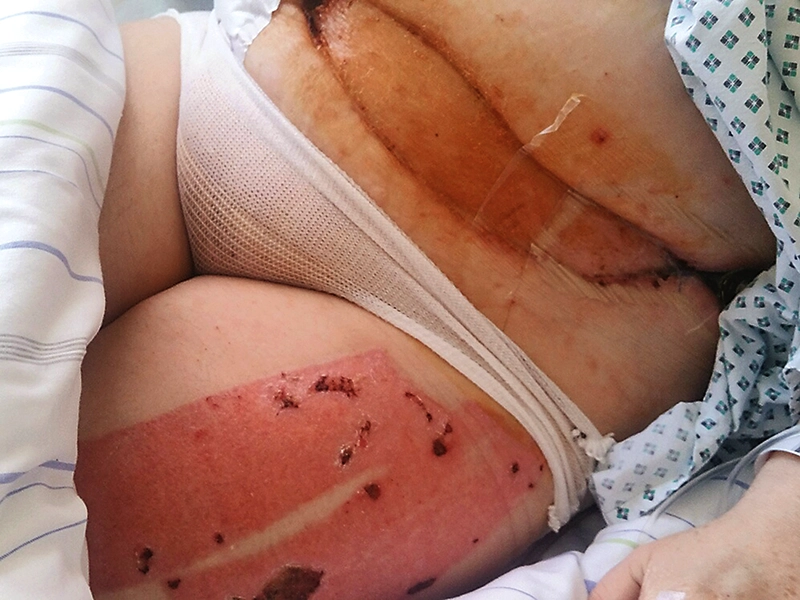
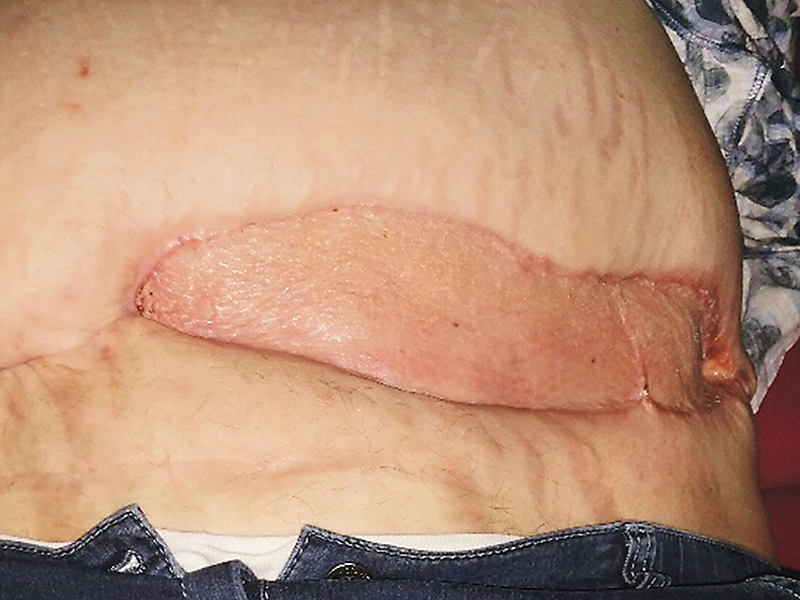
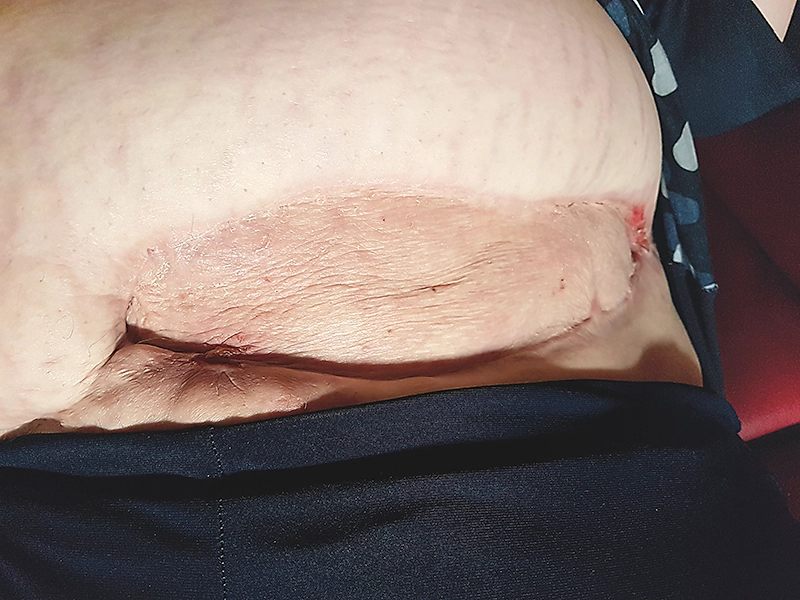
Wound treatment with LIGASANO® White Dressing, sized 39.4 x 31.5 x 0.4 in (100 x 80 x 1 cm), was applied once daily. After three weeks, partial closure of the wound was achieved. The remaining wound was then treated with Negative Pressure Wound Therapy (NPWT), which was administered in seven sessions, each lasting three days. By early April, the wound was successfully closed with a split-thickness skin graft taken from the upper leg. The patient was discharged from the hospital in mid-April. Post-discharge, daily check-ups were conducted by the primary care physician. Both the patient‘s general health and mental state improved remarkably. The graft site also healed well. The patient is currently not undergoing any further medical treatment. However, due to weight gain, the cosmetic outcome of the wound has not been as satisfactory as initially
-
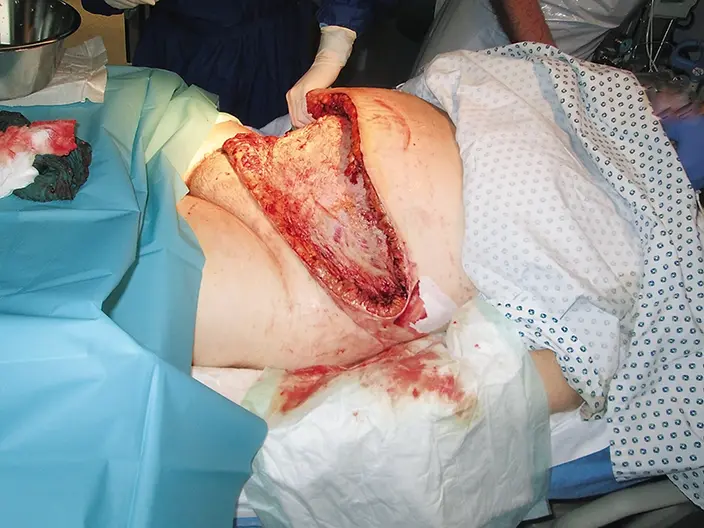
Fig. 1: February 3, 2016 -
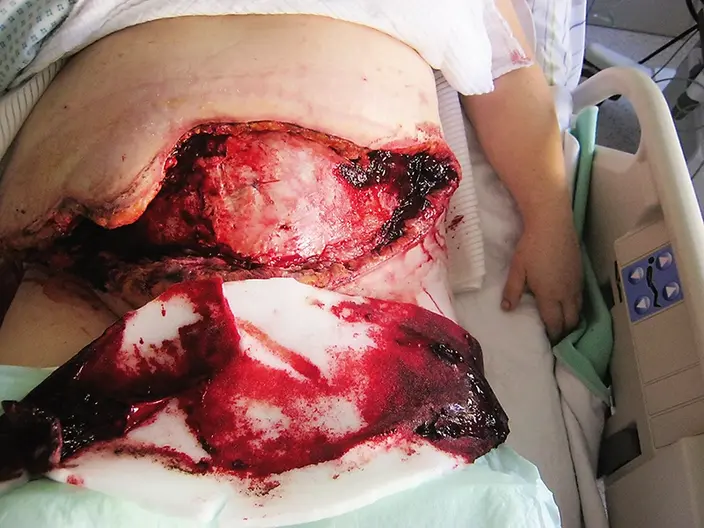
Fig. 2: February 6, 2016 -
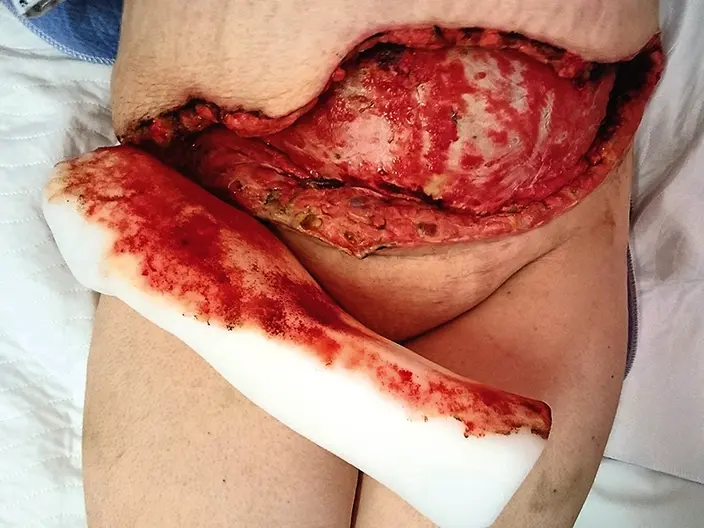
Fig. 3: February 12, 2016 -
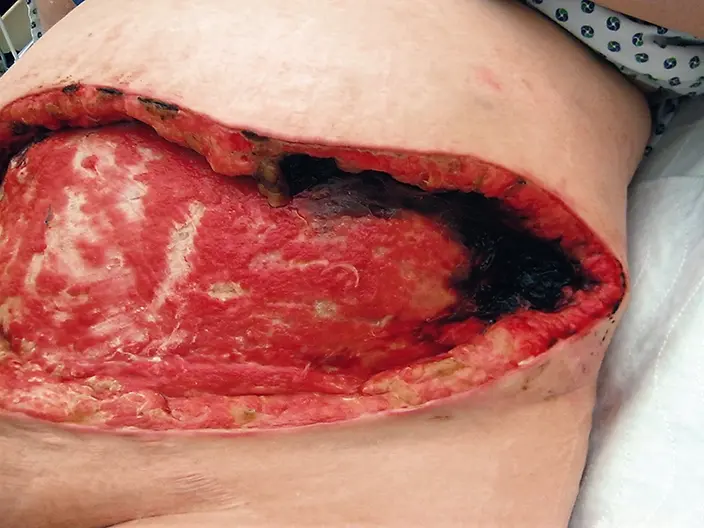
Fig. 4: February 15, 2016 -
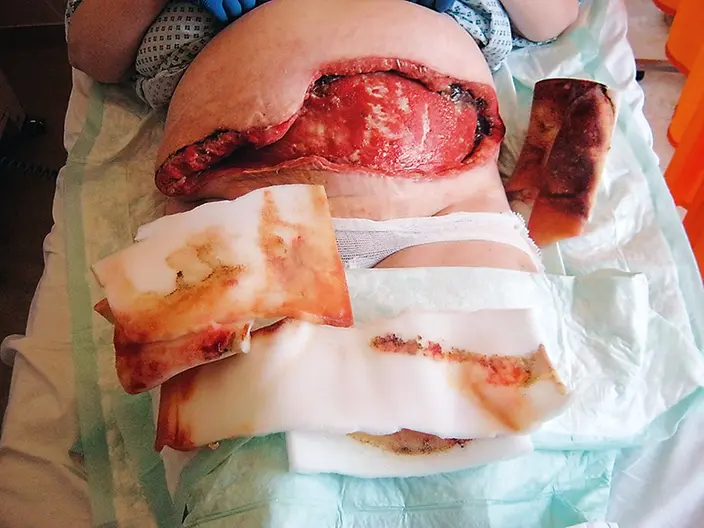
Fig. 5: February 18, 2016 -
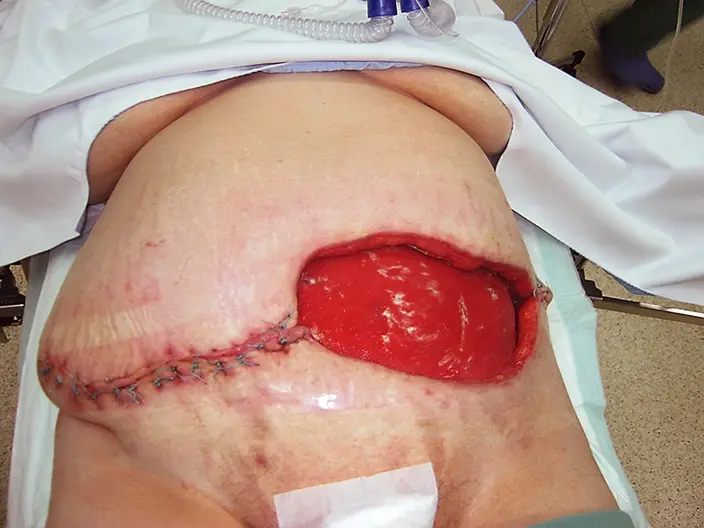
Fig. 6: March 1, 2016 -
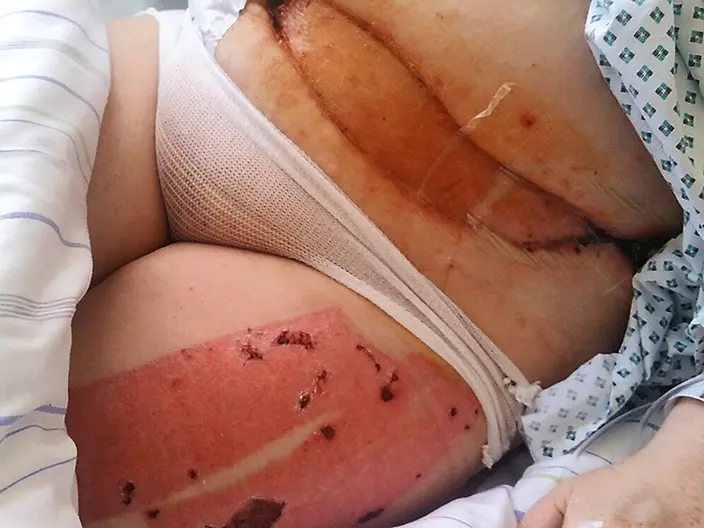
Fig. 7: April 13, 2016 -
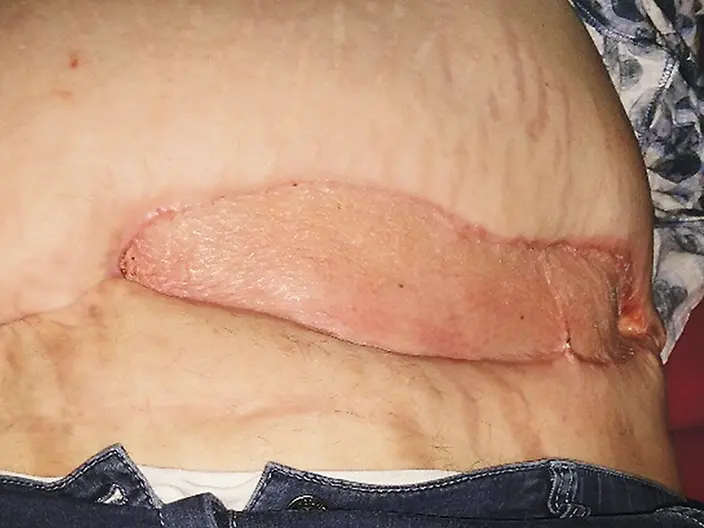
Fig. 8: May 23, 2016 -
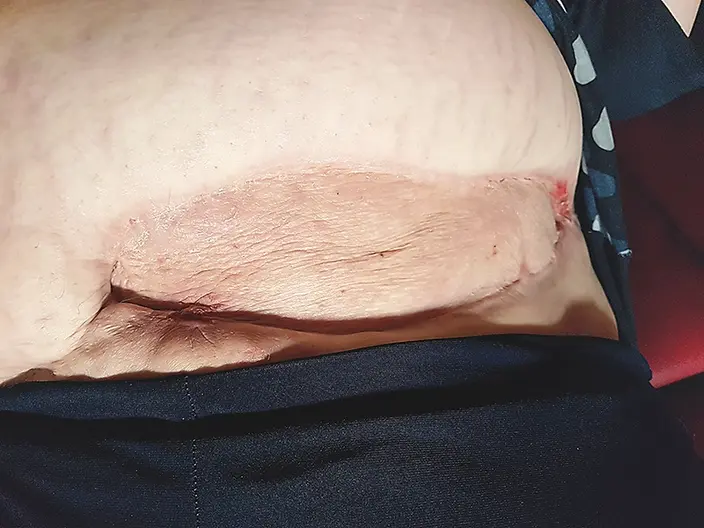
Fig. 9: October 25, 2016